
Searching Carroll County Civil Dockets
The practical first stop is Indiana MyCase. Pick Case when you know the number. Pick Name for a person. Use Business/Organization Name for an entity. The form will reject a person last name and business name typed together. Choose Carroll County, and only narrow to Civil, Family, or Probate when the category is fairly certain. Status and filing-date filters help trim a long result list.
Match the Carroll court, case type, file date, party role, and formatted case number. A matching title alone proves little. Treat the system as a public convenience. It can omit converted, sealed, confidential, or older information. When a record is missing, reach the County Clerk by phone, at the counter, or by mail. Give the court, case number or style, date range, and the exact filing. Say whether you want inspection, a plain copy, or a certified copy.
- Choose Case, Name, or Business/Organization Name.
- Select Carroll County and a useful civil category.
- Add status or filing dates only when known.
- Verify the court and parties in the Case Summary.
- Read the CCS and request missing documents from the clerk.
Carroll Superior Civil Routing
Carroll Superior Court handles most civil work. Its local caseload rule grants exclusive jurisdiction over a long list of matters. The list covers civil collection, commercial-court-eligible matters, civil plenary, civil tort, dissolution and custody, eviction, grandparent visitation, administrative judicial review, mortgage foreclosure, probate and guardianship, paternity, and small claims. Where the local rule is not exclusive, Circuit Court keeps concurrent jurisdiction. The Carroll County court-system page lays out the local court structure. Use it to route these dockets.
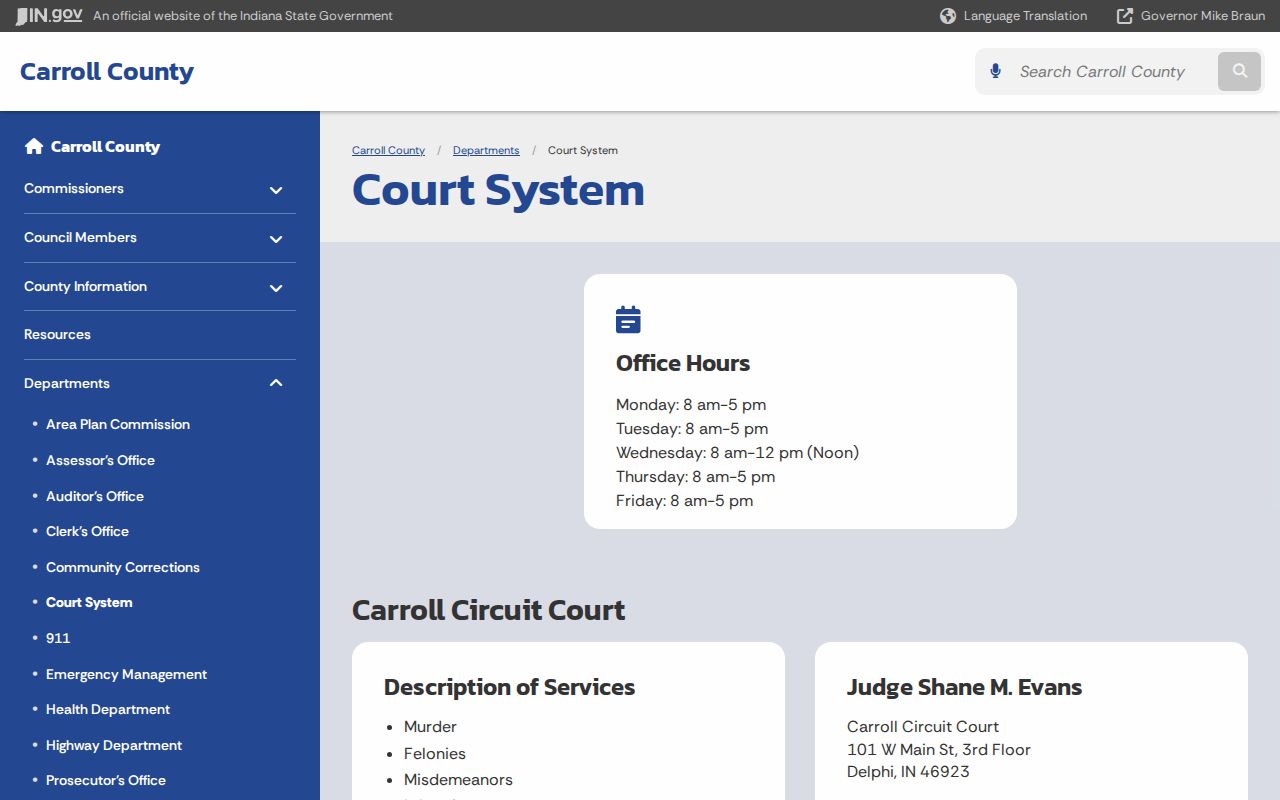
Trust the court named in the case header. A topic label by itself cannot tell you whether a filing belongs in Superior or Circuit Court.
Inside a Carroll County Civil Docket
The civil Case Summary opens with the basics. These are the style, number, court, case type, filing date, status, flags, and related cases. Party blocks list roles and public attorney information. The CCS, or Chronological Case Summary, records events by date and may link public documents. Hearing rows can show session, result, judicial officer, comments, and cancellation data. Judgment events can name the status, amount, parties, book references, and comments.
| Header | Court, case number and type, file date, status, and related matters. |
|---|---|
| Parties | Plaintiff, defendant, petitioner, respondent, attorneys, and role changes where public. |
| CCS | Filing dates, service, motions, hearings, orders, documents, and results. |
| Judgment | Status, amount, to and against party labels, books, and comments where used. |
| Financial area | Balance, charges, credits, payments, and transactions when the court publishes them. |
A linked icon can stand for one or more documents. Not every item is open to public view. For certification, or for any record whose omission could change the meaning, the clerk's official file remains the source.
Carroll Civil Number Codes
Carroll County is code 08, and Superior Court uses 08D01. A civil collection number may look like 08D01-YYMM-CC-######; a tort example may use CT. These are format examples, not real cases. The middle date block gives the filing year and month. The ending digits give the sequence.
CC civil collection; CT civil tort; PL civil plenary; EV eviction; MF mortgage foreclosure; SC small claims. DC or DN mark domestic relations; AD is adoption. ES, EM, GU, and TR are probate-related categories.
Check the current Rule 8 reference for definitions. Codes label filing categories only; they say nothing about winners, factual findings, or where a dispute stands now.
Civil Case Types on the Docket
Money disputes are only part of the picture. Carroll County civil dockets also hold collections, tort claims, broad plenary actions, evictions, foreclosures, judicial reviews, protective proceedings, family matters, probate, guardianship, and small claims. Each type follows its own filing path and access limits. A broad MyCase search can span categories. A narrow filter may hide a matter filed under a code the searcher did not expect.
| Carroll matter | Typical docket focus | Access caution |
|---|---|---|
| Collection or tort | Complaint, service, response, motions, order, judgment | Sensitive exhibits may be excluded |
| Small claims | Claim, notice, setting, judgment, later collection events | The latest CCS entry controls |
| Family | Petition, notices, settings, orders | Some records and personal data are restricted |
| Probate or guardianship | Petition, appointment, inventory-related events, orders | Document access varies by type |
Carroll Complaints Versus Judgments
A complaint or petition only states a claim or asks the court to act. It is not a judgment. An answer responds. A motion requests action, and an order records what the court decided on that request. A judgment may resolve all or part of the matter. Search snippets often highlight the first filing. Follow the CCS through later orders and post-judgment events.
Practical check: Read initiation, service, response, hearing, order, judgment, and post-judgment entries in date order before describing a Carroll County civil result.
Treat a closed status with care too. It means no current open activity in the system, not a particular winner or form of relief. When an online event lacks the order, ask the clerk for that exact filing by date and description.
Civil Docket Settings and Hearings
A civil setting can address status, discovery, default, dismissal, injunction, evidence, settlement, or trial. It is not a criminal arraignment. Carroll's local rules require proposed orders for specified requests. Those requests involve continuance, default, dismissal, discovery, protective relief, injunctions, findings, and settings. Such steps can generate separate CCS entries before a matter resolves.
If a hearing moves, compare the separate Indiana Court Calendar with the latest CCS. A reset, canceled marker, or continuance entry changes a date without ending the case. The Carroll County court dates route explains the limited calendar window and direct confirmation options.
Carroll E-Filing Behind the Docket
Attorneys and other approved filers send civil filings into Indiana's e-filing system through certified providers. A document does not land on the docket the moment it leaves their hands. It first passes through a provider workflow. Then it waits for acceptance before appearing as a CCS event. Speed varies. Electronic submission also keeps confidential content confidential. So e-service never quietly opens sealed material to the public. Self-represented filers should read the current state schedule and the court's instructions. Not every case type moves through the same channel.
The state's own page lays out the official Indiana e-filing workflow. It runs from submission through provider review to acceptance on the docket.
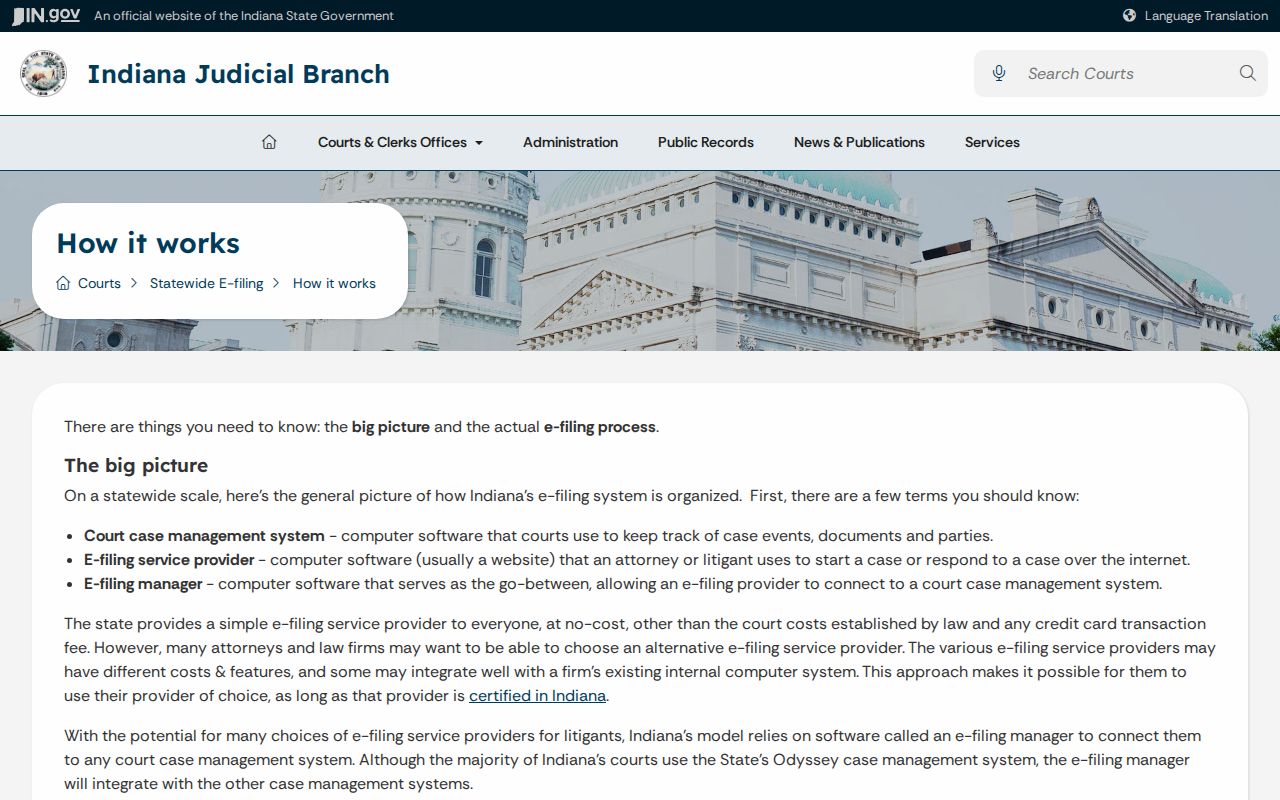
That sequence explains a common puzzle: why a submitted paper sits invisible for a while before an accepted CCS event shows up in the Carroll County court docket.
The state also maintains a list of certified e-filing providers worth checking before you choose a channel.
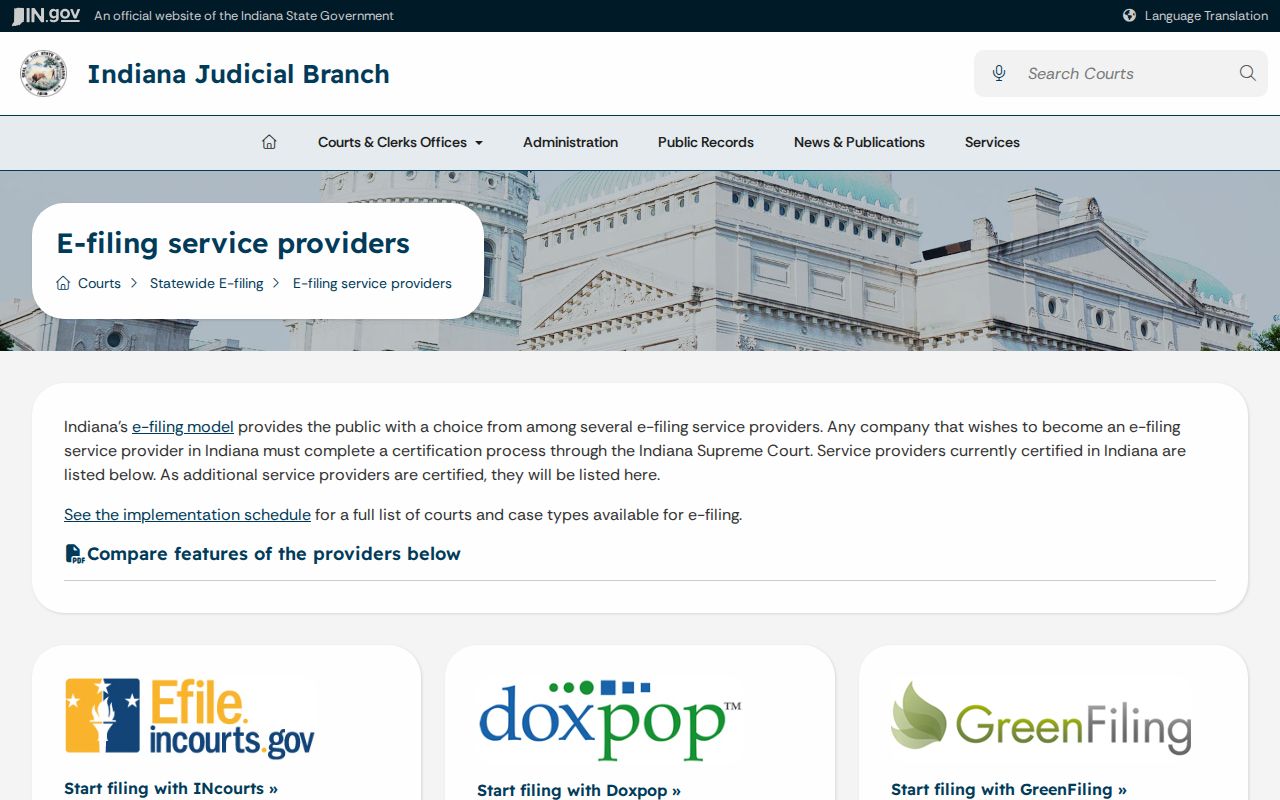
Keep the pieces straight. A provider only moves the filing from your desk to the court. MyCase then displays the public case information, while the Carroll County Clerk keeps the official local file that actually controls.
Civil Docket Access Rules
Plenty of non-confidential Carroll civil documents can be pulled up through MyCase, though what you see depends on the case and the document type. Family law files, juvenile matters, adoptions, guardianships, mental-health records, and protection-order cases may all be restricted. Even then, a public docket can still tell you an exhibit, medical report, financial form, or in-camera filing exists. It just won't show what's inside. In-camera simply means the judge reviews the item privately rather than in open court.
For paperwork itself, the state's Indiana court forms collection posts the forms used across Indiana's civil, family, and probate filings.
Forms get a filing started, but they prove nothing about a specific Carroll case. A filled-out form is not a docket entry. Only the docket confirms the court accepted the document.
The access rules tilt toward openness. Indiana Access Rule 4 presumes Court Records are public unless an exclusion applies. Rule 5 handles confidential, sealed, and redacted material. Indiana Code section 5-14-3 adds broader inspection and copying rights, subject to its own exceptions.
For counter access, mailed requests, phone guidance, older records, or certified copies, contact the clerk. Carroll County posts no single fee schedule covering every civil product. So confirm the cost and format before you order.
Carroll Civil Copy Requests
Found a public CCS entry with no downloadable paper? Write down the formatted case number, the court, the event date, and the filing description. Then ask the Carroll County Clerk about your options. You might inspect the item at the counter, get a plain copy, have it mailed, or receive a certified one. Transcripts are different. Those requests go to the court reporter. An archived file may take extra retrieval steps.
Any request should identify the record with reasonable particularity. A quick call can settle the format and the current fee. MyCase is a fine tool for locating the event. But its screen is not a certified copy. When you must verify an order, judgment, or complete filing, the clerk's record is the source that counts.